Unique Legal Challenges in LGBTQ+ Divorce

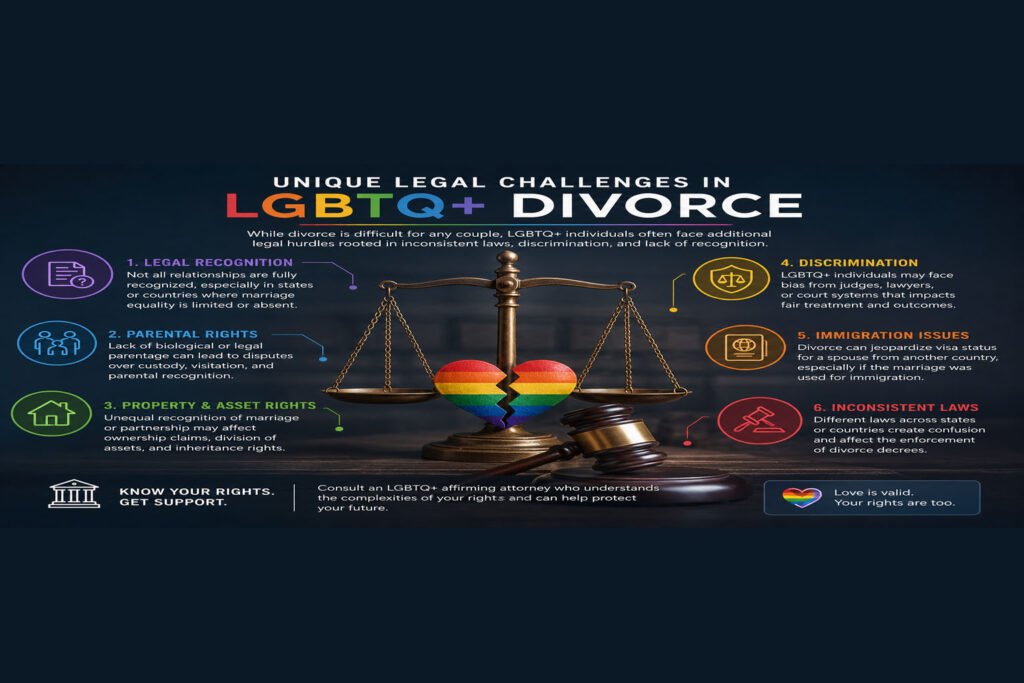
LGBTQ+ divorce involves the same core issues as any other divorce, including property, support, and parenting. However, couples may also face unique questions involving when their relationship became legally recognized, whether they live in different states, and how parentage was established. For guidance tailored to these concerns, https://turcolegal.com/new-hampshire-family-law/new-hampshire-same-sex-divorce-lawyer/ discusses issues that may arise in New Hampshire same-sex divorce matters.
These details can be especially important when spouses are married in one state, later move across state lines, own property in several locations, or are raising children whose legal records do not tell the whole story of their family. Careful preparation can help identify potential complications before they create delays or conflict.
Why State Lines Matter in LGBTQ+ Divorce
A couple may have married in Vermont, lived together in Massachusetts, purchased a vacation home in Maine, and then separated after one spouse moved to New Hampshire. Each location can matter for different reasons. A court must have authority to grant the divorce, address parenting issues, and make orders affecting the people or property involved.
State lines may affect service of legal papers, hearing schedules, travel costs, child exchanges, real estate transfers, and enforcement of future orders. The fact that a marriage was legally performed elsewhere does not automatically mean that the state where the marriage was performed is the best or only place to file.
Where to File a Divorce Case
Before filing, spouses should consider where each person currently lives, how long they have lived there, where their children reside, where major assets are located, and whether either person has already started a related court case. Filing first without evaluating these details can lead to jurisdiction disputes or duplicated proceedings.
Current forms, filing steps, and procedural information are available through the New Hampshire court resources. Court requirements, fees, and deadlines can change, so it is important to verify the applicable rules before submitting paperwork.

Marriage Recognition and Relationship History
Same-sex marriages lawfully performed in another state must be recognized nationwide under the Supreme Court’s decision in Obergefell v. Hodges. Even so, the timeline of a relationship may remain important in a divorce. Some couples shared finances, bought homes, raised children, or entered civil unions before they were legally able to marry in their home state.
The legal marriage date may affect questions about property division, support, retirement benefits, and premarital agreements. Couples should also collect records involving civil unions, domestic partnerships, prior marriages, name changes, and corrected vital records. A full relationship timeline may provide useful context when the legal documents do not reflect the length of the family relationship.
Children, Parentage, and Parenting Plans
Parenting disputes can be particularly sensitive when one parent is not biologically related to a child or when legal parentage was established through adoption, assisted reproduction, a court order, or a marriage-based presumption. A divorce does not erase a parent-child relationship, but the available legal records can significantly affect how issues are presented and resolved.
Records to Review
- Birth certificates and amended birth certificates.
- Adoption decrees and parentage judgments.
- Assisted with reproduction agreements and donor-related documents.
- Prior parenting, custody, or child support orders.
- School, medical, and insurance records identifying each parent.
A practical parenting plan should address weekly routines, holidays, school breaks, transportation, remote contact, medical decisions, and interstate travel. Courts generally focus on a child’s needs, stability, and established caregiving relationships rather than assumptions about gender, biology, or traditional family roles.
Property, Debts, and Financial Accounts
Dividing finances can be harder when assets and debts are spread across several states. Real estate may be titled in one spouse’s name, retirement accounts may have beneficiary designations that are no longer appropriate, and jointly used accounts may contain records dating back to before the legal marriage.
Items to Organize
- Homes, land, vacation property, vehicles, and valuable personal property.
- Bank accounts, investments, retirement plans, pensions, and cryptocurrency holdings.
- Business interests, insurance policies, mortgages, credit cards, and tax obligations.
- Documents showing gifts, inheritances, premarital assets, or separate contributions.
A simple working list can help: identify each asset or debt, note its location, state whose name appears on the account or title, and gather the latest supporting statement. This organization is useful even when spouses expect to reach an amicable agreement.
Support and Enforcement Issues
Alimony and child support decisions depend on the facts of the case, including income, earning capacity, health insurance, child care costs, housing expenses, parenting time, and the needs of each household. Pay stubs, tax returns, bonus records, self-employment information, and benefit statements should be collected early.
When a spouse later moves, support orders may need to be registered or enforced in another state. Keeping complete copies of final orders, payment histories, and updated contact information can make future enforcement or modification requests more manageable.
A Practical Filing Checklist
- Confirm residence, court authority, and possible filing locations.
- Gather marriage, parentage, financial, property, and insurance records.
- Identify any existing custody, support, protective-order, or divorce cases.
- Create a short-term plan for housing, money, transportation, and child routines.
- Review legally valid methods for serving divorce papers.
- Track court dates, response deadlines, mediation sessions, and document requests.
- Consider post-divorce updates to beneficiaries, insurance, titles, and emergency contacts.
Common Mistakes to Avoid
- Assuming the state where the marriage occurred must handle the divorce.
- Leaving out property, debts, or retirement accounts located in another state.
- Relying on informal parenting arrangements that conflict with a court order.
- Moving a child or changing schools without reviewing applicable relocation requirements.
- Deleting texts, emails, financial statements, or parenting records that may be relevant.
- Overlooking older civil union, adoption, or parentage documents.
Final Thoughts
Unique legal challenges in LGBTQ+ divorce often arise from the details surrounding recognition, parentage, mobility, and family history. A thoughtful review of the marriage timeline, court authority, child-related records, property documents, and support information can provide a clearer starting point. Organized records and realistic planning help families address immediate needs while preparing for long-term changes.
More Read: Top stories