When the Ride Goes Wrong: Your Motorcycle Crash Checklist

Key Takeaways
- Personal safety and emergency medical needs come before photographs, paperwork, or insurance calls.
- Crash injuries can be masked by adrenaline, so prompt medical evaluation is important even when pain seems minor.
- Photos, witness information, medical paperwork, and repair records can preserve a clearer account of what happened.
- Brief, truthful insurance communication is usually wiser than guessing about speed, distance, injuries, or fault.
- Protective gear, sober riding, visibility, and training remain important ways to reduce risk on future rides.
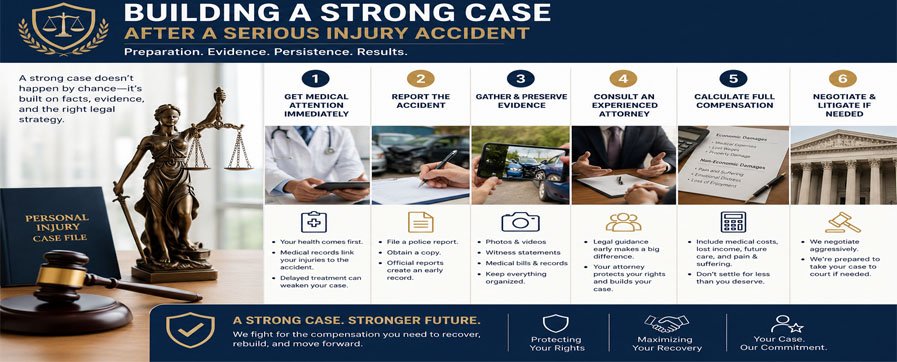
A motorcycle crash can turn an ordinary ride into a confusing, high-pressure situation within seconds. Whether the collision seems minor or serious, taking calm, practical steps can protect your health and preserve important details. If injuries are significant, fault is disputed, or an insurer presents a release, it may be appropriate to get legal help after your immediate medical needs are addressed. This checklist is designed for the minutes, days, and weeks after a crash. It is not a substitute for emergency care or professional advice, but it can help riders and families focus on the actions that matter most while events are still fresh in their minds.
What to Do in the First Few Minutes
Start with safety. If you can move without worsening an injury, get out of active traffic and away from leaking fuel, debris, or blind curves. Call 911 if anyone may be injured, if traffic remains dangerous, or if the collision requires police assistance. Do not remove another rider’s helmet unless emergency personnel instruct you to do so, especially if a head, neck, or spine injury is possible.
- Turn on hazard lights or use safe warning devices if available.
- Remain at the scene unless transport for urgent medical treatment is necessary.
- Exchange identifying and insurance information with the other involved drivers.
- Keep conversations calm and avoid arguing about who caused the crash.
Why Medical Care Should Come Early
Adrenaline can make a rider feel better than they are immediately after impact. Headaches, dizziness, nausea, neck pain, numbness, swelling, back pain, and shoulder injuries may develop later. Accept emergency transport when responders recommend it, or arrange a timely medical evaluation if you were thrown from the motorcycle, struck your head, or have any new symptoms. Describe every symptom accurately, including ones that seem small. Follow instructions for imaging, medication, therapy, and follow-up care. Keep copies of visit summaries, prescriptions, bills, and work restrictions. A rider who initially feels fine but develops worsening pain or confusion later should seek medical attention rather than assuming the symptoms will resolve on their own.
How to Document the Crash Scene
If the area is safe and you are physically able, use a phone to record details before vehicles are moved and debris is cleared. Do not step into traffic or put yourself at risk for a better angle.
Photos and Video to Consider
- The motorcycle and every involved vehicle from several angles.
- License plates, damage, skid marks, debris, fluid spills, and damaged gear.
- Lane markings, traffic signals, road signs, potholes, and construction zones.
- Weather, lighting, visibility, and the wider area around the crash.
- Visible injuries, if doing so does not interfere with emergency care.
Why Witnesses and Police Reports Matter
Independent witnesses may provide useful context when the people involved remember events differently. Ask for names, phone numbers, and email addresses when possible. Write down what witnesses say in your own words, but do not pressure anyone to take a side. Also, request the incident or report number from responding officers and note how to obtain the completed report. Police reports are valuable records, but they are not always complete or error-free. Save any helmet-camera or dashcam footage promptly, and identify nearby businesses or homes that may have captured video before recordings are overwritten.
What to Know Before Speaking With Insurers
Notify your insurer promptly and provide basic, accurate facts about the date, location, people involved, and vehicles involved. Avoid filling gaps in memory with guesses. It is reasonable to say that injuries are still being evaluated if you do not yet know the full extent of treatment or recovery needs.
- Keep a written log of calls, emails, names, claim numbers, and requests.
- Answer truthfully, but do not speculate about speed, distance, or fault.
- Read documents carefully before signing them.
- Do not assume an early payment reflects future treatment, missed work, or repair costs.
Records to Save After the Crash
Create one digital folder and one paper folder for crash-related documents. Save the police report, insurance information, scene photos, witness contacts, medical records, bills, towing invoices, repair estimates, and receipts for medication, transportation, replacement gear, and other out-of-pocket expenses. Employer records showing missed time or changed duties can also be useful. A brief daily recovery journal can add context that bills alone cannot show. Record pain levels, sleep issues, appointments, activities you missed, and changes in your ability to work or perform routine tasks. Stick to clear facts and dates.
Common Mistakes to Avoid
- Leaving required information before is exchanged, or police instructions are followed.
- Posting details, photographs, or opinions about the crash on social media.
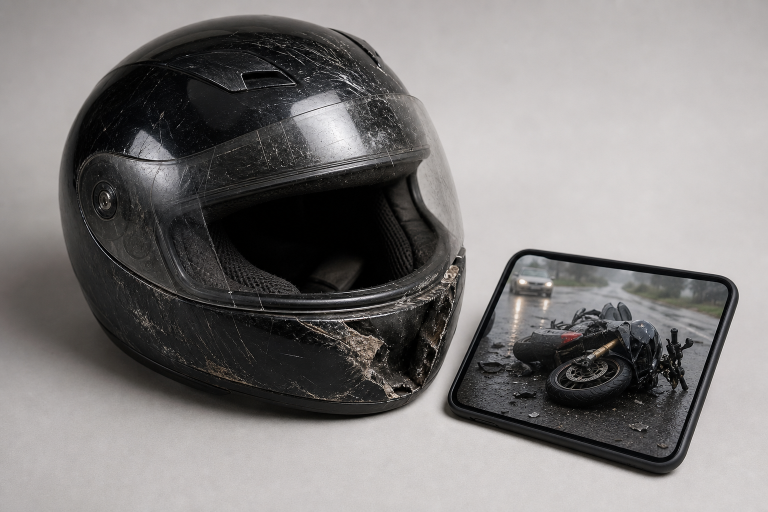
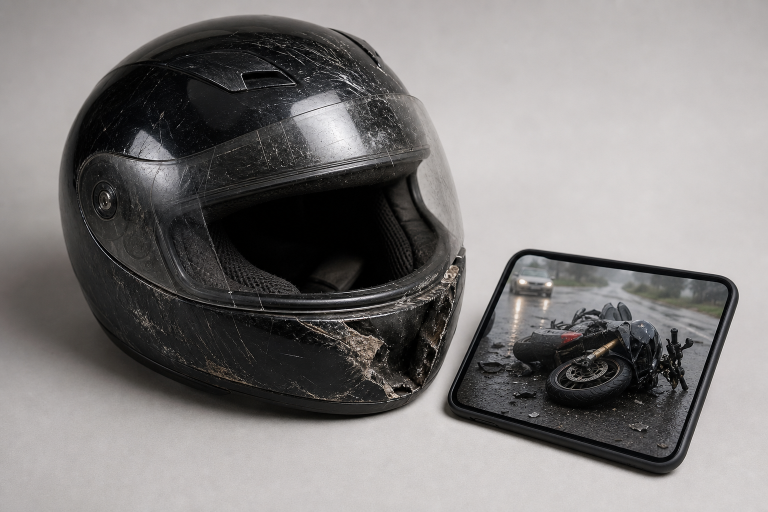
- Throwing away a damaged helmet, jacket, boots, gloves, or motorcycle parts.
- Repairing, selling, or disposing of the motorcycle before documenting its condition.
- Skipping follow-up treatment because symptoms appear manageable.
- Giving inconsistent accounts because you feel pressured to answer immediately.
Safety Lessons for Future Rides
No rider can control every driver, road hazard, or weather condition. Still, practical habits can reduce risk. The risk of serious crash injuries can be reduced through consistent helmet use, protective equipment, sober riding, and safety-focused decisions before every trip.
- Wear a properly fitted, DOT-compliant helmet and abrasion-resistant gear.
- Check tires, brakes, lights, signals, and fluid levels before riding.
- Leave added space near intersections and vehicles preparing to turn.
- Reduce speed for wet pavement, gravel, poor visibility, and unfamiliar roads.
- Use reflective materials and keep headlights on to improve visibility.
- Consider rider training after a long break or when switching motorcycles.
Current national data show why these habits matter. In 2024, 6,228 motorcyclists were killed in U.S. traffic crashes, and riders can review practical federal motorcycle safety guidance on helmets, visibility, licensing, vehicle checks, and sharing the road.
Common Questions About Motorcycle Crashes
Should a rider go to the hospital after a crash?
Emergency care is especially important for severe pain, heavy bleeding, trouble breathing, fainting, confusion, weakness, or possible head, neck, or spine injuries. A timely medical check is still sensible when symptoms are delayed or uncertain.
Should the motorcycle be repaired right away?
Photograph the damage and save inspection records and estimates before repairs begin. Damaged parts and gear may help document the crash and should not be discarded too quickly.
What if the other driver has no insurance?
Review your own policy for uninsured or underinsured motorist coverage and ask the insurer what documentation it needs. Coverage and deadlines vary by policy and state.
Conclusion
A clear plan after a motorcycle crash begins with safety and medical care, then moves to documentation, recordkeeping, and careful communication. These steps cannot undo the collision, but they can help protect your well-being and preserve an accurate account while you focus on recovery. Photograph the crash scene, motorcycle damage, road conditions, and visible injuries when it is safe to do so. Keep medical records, receipts, insurance correspondence, police reports, and witness information organized in one place. Avoid guessing about fault, discussing the incident extensively on social media, or accepting a settlement before you understand the full extent of your losses. If injuries are serious or liability is disputed, timely guidance can help you understand your options and responsibilities.